





AI gives attackers speed.
Speed makes reactive defense late.
AI compresses reconnaissance, credential misuse, and lateral movement.
When attackers move at machine speed, the first reliable signal has to come before access becomes impact.




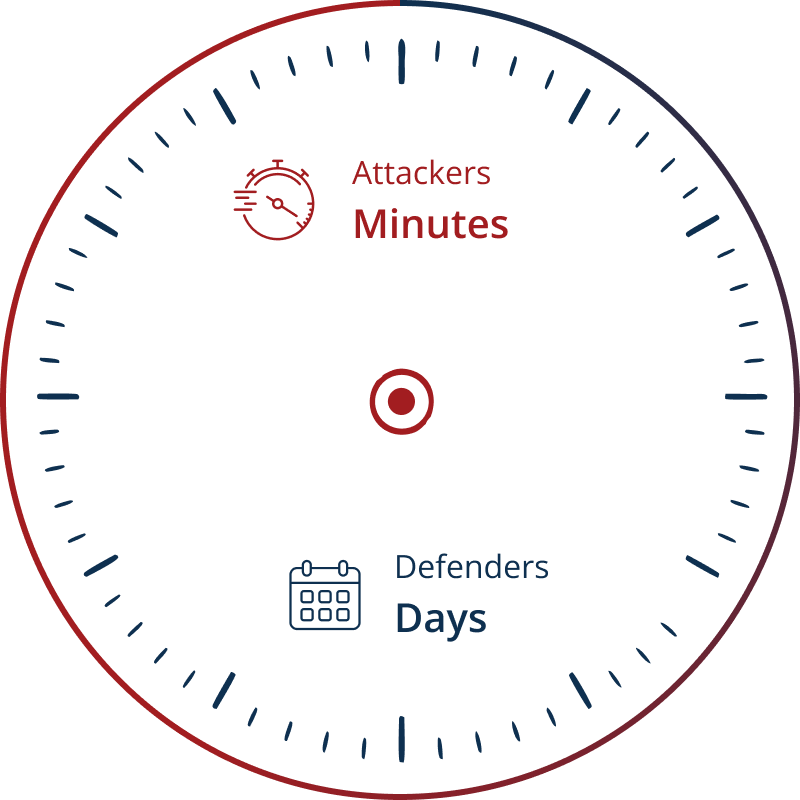
Attackers move in minutes,
AI runs every path at once.
AI runs reconnaissance, access, and lateral movement simultaneously. Traditional detection often fires after impact.




Earlier signal. Earlier disruption.
Intent is the earliest reliable signal
Most controls were built for human attackers, inferring risk from behavior, context, and probability. AI changes who’s moving through your environment. Deception changes the test by turning any attacker interaction into a high-confidence signal.


Preemptive cyber deception works to deny, deceive, and disrupt, before the attacker reaches impact.

Change what attackers can see, trust, and act on
360 Deception creates a high-uncertainty environment where attackers and autonomous systems cannot trust what they see, validate, or act on.



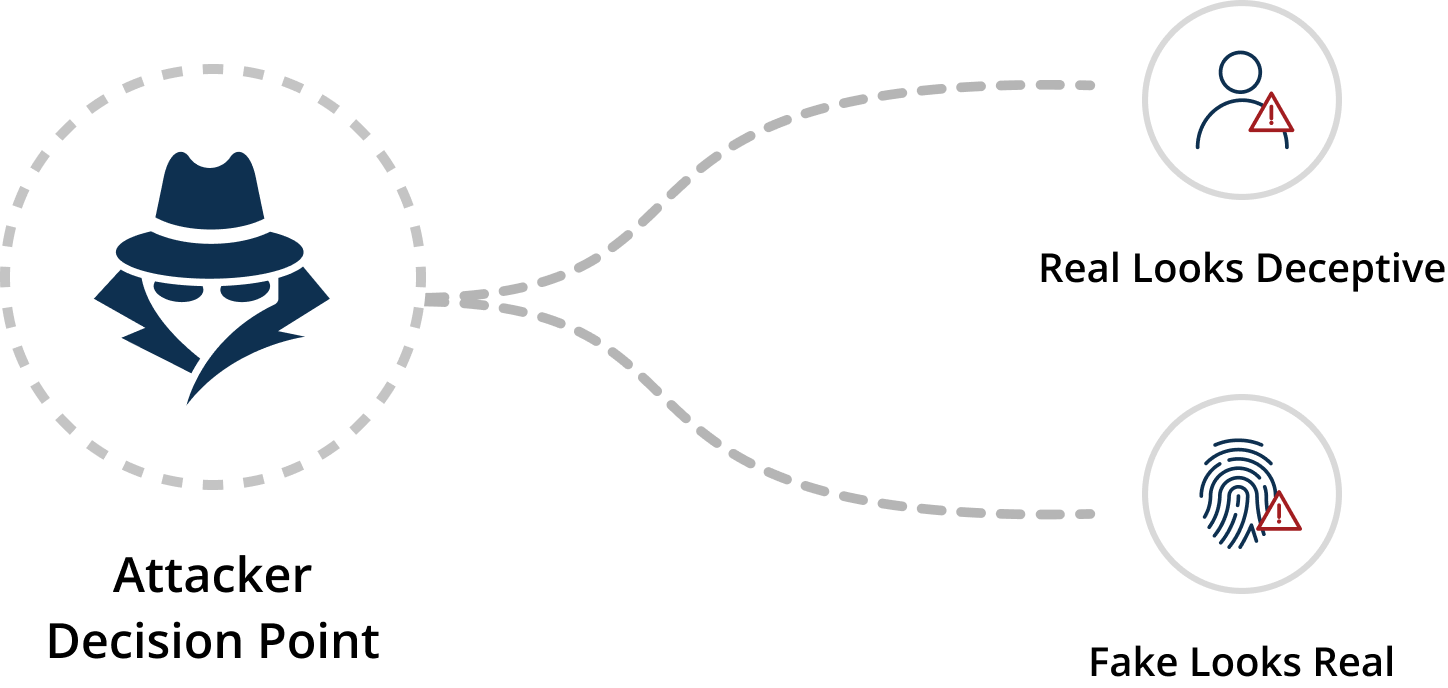

Deceive What They See.
Degrade What They Trust.
Disrupt What They Act On.
360 Deception goes beyond decoys to manipulate the signals attackers and autonomous systems rely on to validate targets, credentials, and movement paths, before they can act.

Decision Path








Operationalize Deception Across The Enterprise
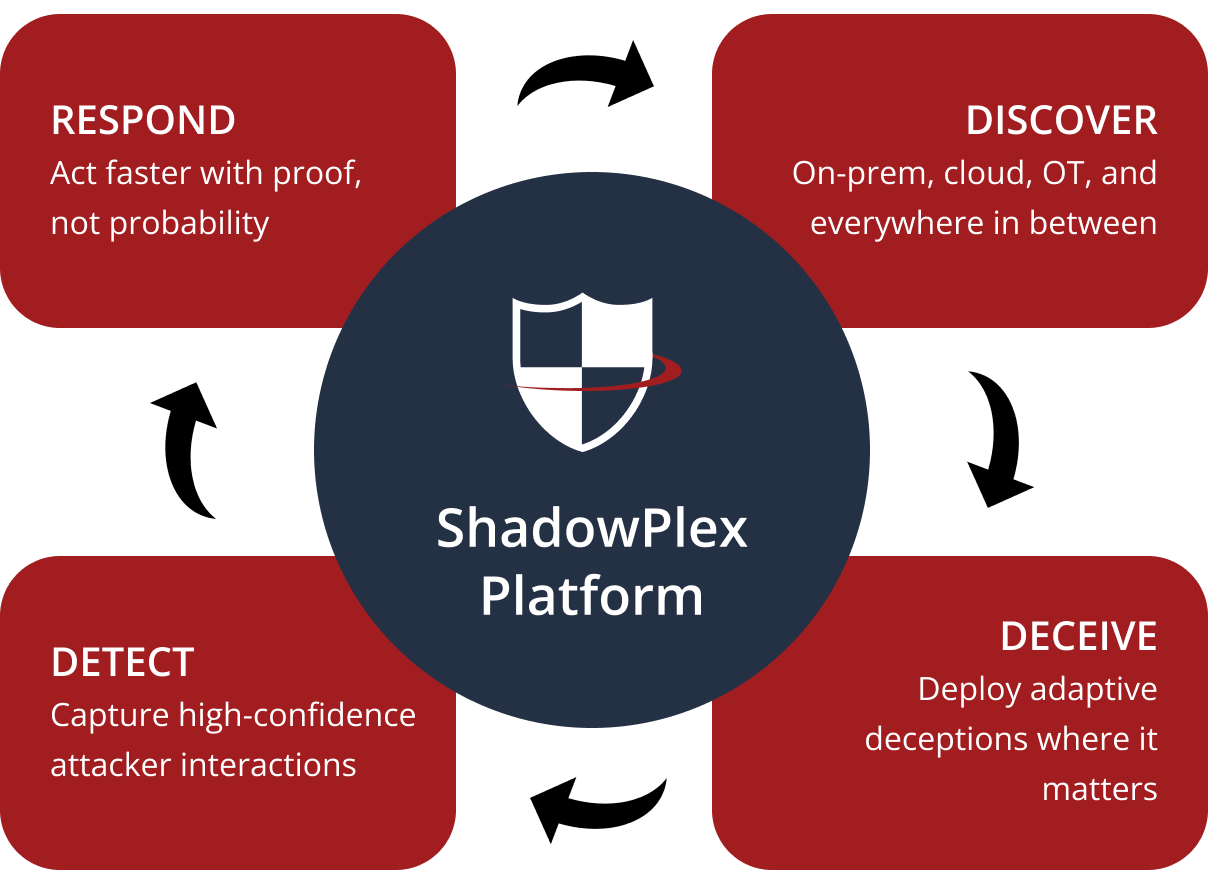
ShadowPlex from Acalvio is the deception platform built to operationalize 360 Deception at enterprise scale. Agentless deployment across identity, cloud, network, endpoints, and OT/ICS. Adapt in real time. Prove impact.




A Strong Foundation of Strategic Partnerships







From Visibility To Advantage.
Deception That Works As Hard As You Do.
ShadowPlex enables security teams to disrupt attackers earlier, adapt to changing environments, and demonstrate measurable risk reduction.



Deception for the Attack Paths AI Accelerates
Acalvio applies deception-powered defense across the environments and attack paths where AI-accelerated speed, trust abuse, and identity misuse create the greatest risk.

Explore Acalvio by Security Priority
Start with the security challenge you need to solve. Acalvio helps teams expose intent earlier across identity, cloud, OT, network, applications, AI-driven attacks, insider threats, and Zero trusts program.

Proven Innovation. Trusted outcomes.
Acalvio combines patented deception technology, real-world validation, and industry recognition to deliver measurable results for enterprise and government environments.









Reactive Defense Is Structurally Late.
AI has compressed attack timelines from days to minutes. Old-world, slow detection leaves defenders reacting too late. Security teams now need machine-speed detection to keep pace.









Late Detection Has Real Consequences.
When attackers move faster than defenders, the impact reaches far beyond the SOC. Delay increases disruption, dwell time, and business risk.




Go Deeper On AI-Driven Attacks And Preemptive defense
Explore Acalvio resources on 360 Deception, ShadowPlex, identity protection, cloud security, agentic AI, and deception technology validation.


Questions Security Leaders Are Asking About AI-Driven Attacks and 360 Deception
AI has changed how attackers move, validate targets, and exploit trust. These answers explain how Acalvio helps organizations expose intent earlier and disrupt attacks before impact.
360 Deception is a new category of cyber deception designed to break AI attack automation. Unlike traditional deception that relies mainly on isolated decoys or honeypots, 360 Deception creates a high-uncertainty environment that disrupts the stable ground truth attackers depend on. It does this by combining dynamic decoys, honeytokens, evolving deceptive paths, and techniques that make deceptive assets appear production-real while making real assets appear deceptive. Acalvio’s platform delivers this approach across identity, endpoints, cloud, network, and cyber-physical environments to expose malicious intent early during reconnaissance, credential abuse, and lateral movement.
Traditional honeypots rely mainly on isolated decoys that attackers may detect or route around. 360 Deception goes further by creating a high-uncertainty environment across the attack surface. It combines dynamic decoys, honeytokens, evolving deceptive paths, and techniques that make deceptive assets appear production-real while making real assets appear deceptive. This makes reconnaissance less reliable, increases attacker uncertainty, and exposes malicious intent earlier.
360 Deception breaks AI attack automation by disrupting the stable ground truth automated attacks depend on. Instead of allowing attackers to probe a consistent environment, it introduces dynamic decoys, deceptive credentials, and evolving HoneyPaths that corrupt the map adversaries use to validate targets, credentials, and movement paths. This forces exposure during reconnaissance, credential abuse, and lateral movement before attackers can escalate access or achieve their objectives.